Ride sharing sounds simple until you open an app for the first time. Here is how it works on Citaxi—in plain words, with one clear example you can follow.
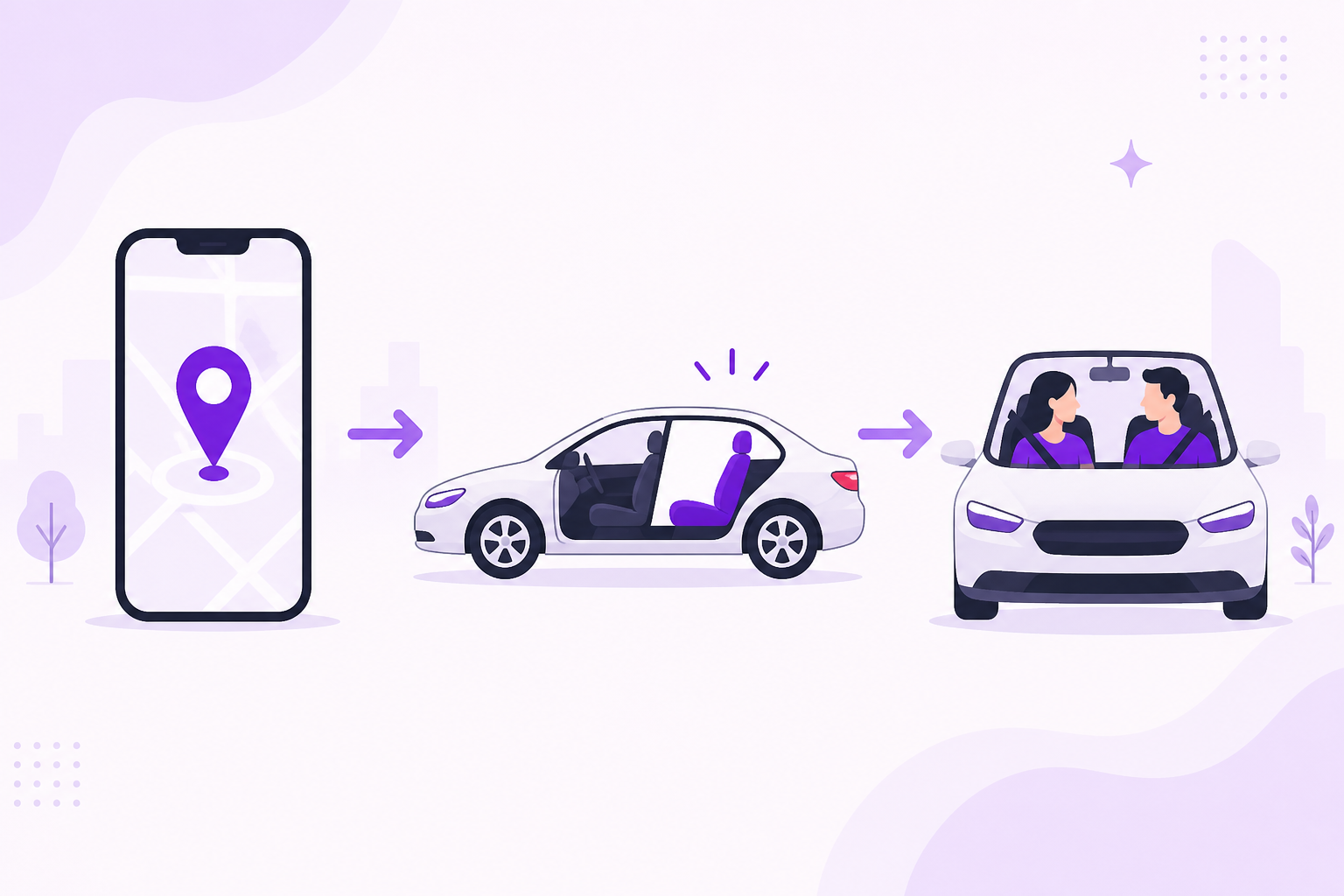
Citaxi helps passengers and drivers connect for shared trips in Satara, Karad, Sangli, Kolhapur, Boisar, Palghar, Dahanu, and near Pune and Mumbai Airport. You are not booking a mystery cab for “anywhere.” You are matching people who are already heading the same way.
The big idea in one sentence
Someone is already going your way (or is willing to). You take a seat. When more seats fill, each person usually pays less than traveling alone.
Two ways to start on Citaxi
A trip already exists
You browse rides going your way, check open seats and timing, then request to join.
You create the need
You set pickup, drop, time, and the fare you offer—then connect with a driver.
Both are ride sharing. Join is usually faster when a matching trip is already live. Request helps when nothing fits your window yet.
Example: Aman needs a morning trip from Karad

Aman lives in Karad and has a morning plan that takes him toward the Pune Airport area. He does not need a private car for himself alone—he needs a reliable seat, a fair share, and a clear pickup.
Same idea on the coast: a rider in Boisar, Palghar, or Dahanu heading to Mumbai Airport checks open seats or requests a trip on the corridor—share the ride when others are going the same way, instead of booking a full private fare alone.
Here is what he does:
If a driver already posted a trip with free seats around his time, he can join instead of creating a new request.
Pickup area, drop area, time window, seat availability, and the fare share shown for that seat.
Once accepted, he meets as agreed and pays the driver for his share—what was clear in the app before he committed.
If no open seat matches his morning, he switches to request a ride: same pickup and drop idea, his preferred time, and the fare he is willing to offer. Drivers who can take the trip can connect.
What happens when seats fill

Think of the trip as one journey with limited seats. Alone, you often carry more of the cost. When other passengers join the same trip, the cost is shared. That is the core of ride sharing—and the main reason people use Citaxi for regular travel.
Always trust the fare share shown in the app for that seat. Distance, time, vehicle, and how many seats fill can change what each person pays.
What Citaxi is (and is not)
- It is a way to join or request shared rides and connect with drivers locally.
- It is focused on Satara, Karad, Sangli, Kolhapur, Boisar, Palghar, Dahanu, and near Pune and Mumbai Airport.
- It is not a promise that every street in Pune city is covered.
- It is not the driver or the vehicle owner—Citaxi is the platform that helps you connect.
Quick checklist before you confirm
- Does the time window actually work for you?
- Is there an open seat for your bags and yourself?
- Is the fare share clear before you tap confirm?
- Do you know how you will meet the driver?
If any answer is fuzzy, pause. A clear shared seat beats a rushed private quote you regret later.
Want the cost angle next?
Once you understand the flow, the next question is usually solo vs shared for regular weeks. Read Solo vs shared ride: cost breakdown for regular travelers.
Quick FAQ
What is the difference between join a ride and request a ride?
Join means taking an open seat on a trip already posted. Request means you set pickup, drop, time, and fare when you need a trip.
How does sharing lower the fare?
When seats fill, riders share the trip cost. Your personal share is usually lower than going alone on the same corridor.
Where does Citaxi work?
Satara, Karad, Sangli, Kolhapur, Boisar, Palghar, Dahanu, and near Pune and Mumbai Airport—not general Pune city rides everywhere.
Bottom line: ride sharing is a matching problem. Find a seat going your way, confirm what you will pay, and travel. Citaxi is built to make that loop simple for local corridors.